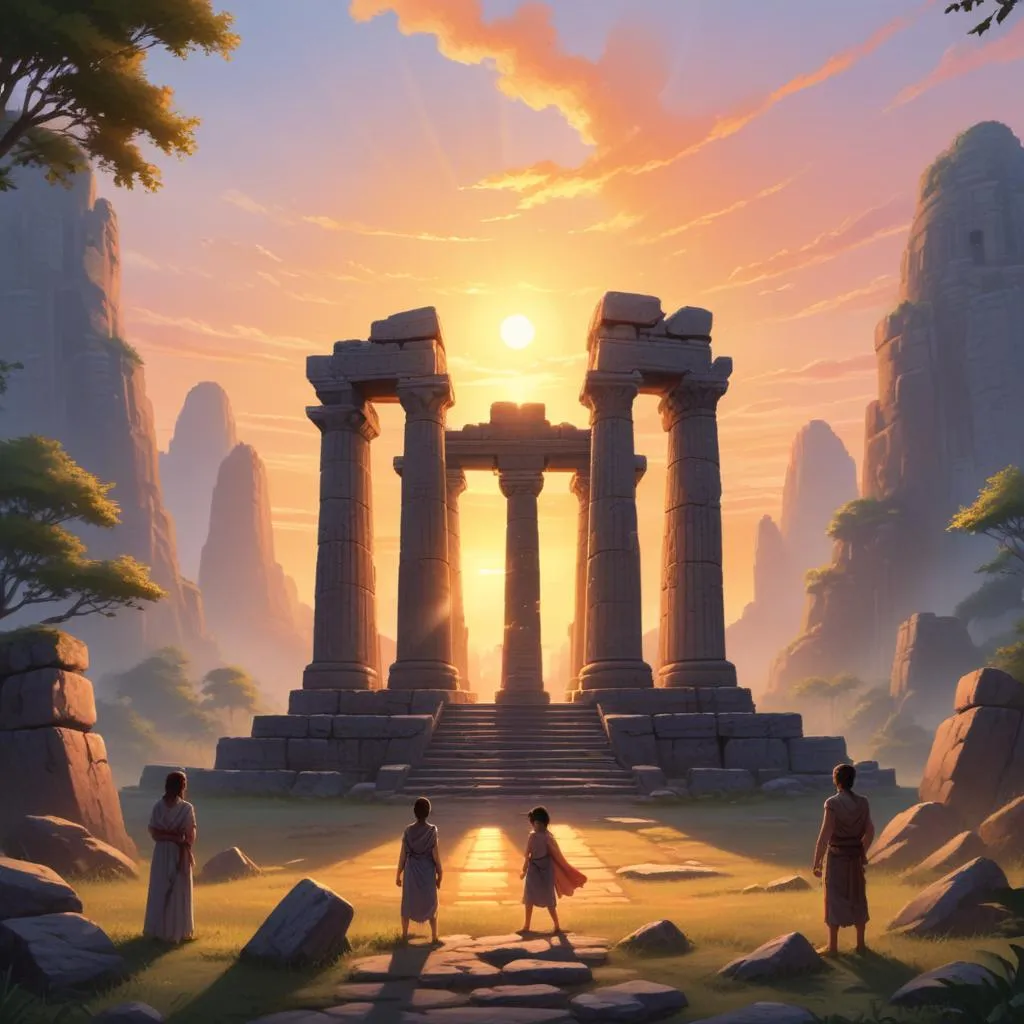
The Divine Descent: Gods in Human Form
The concept of deities taking human form—known as theophany or avatar—is a cornerstone of many spiritual traditions. This descent is rarely a mere disguise; it is a deliberate act of connection, compassion, and revelation.
Purposes of the Divine Descent
- To Restore Balance: Many myths speak of gods incarnating to defeat chaos, evil, or injustice, re-establishing cosmic order (dharma).
- To Bridge the Gap: By experiencing human life—its joys, sorrows, and limitations—the divine makes itself relatable and accessible.
- To Teach and Guide: Divine incarnations often serve as exemplary teachers, demonstrating ideal ways of living, loving, and sacrificing.
- To Offer Grace: The mere presence of the divine in the material world is often seen as an act of supreme grace, uplifting all of creation.
These stories are not merely ancient folklore. They represent a deep psychological and spiritual truth: that the infinite can be found within the finite, and that sacred principles like love, justice, and wisdom can manifest in human action.
The Human Ascent: The Path to Divinity
The reverse journey—humans realizing their own divine nature—is the heart of most mystical and philosophical paths. This is not about becoming a different species, but about awakening to the transcendent consciousness already present within.
Common Pathways to Spiritual Realization
- Contemplation & Meditation: Turning inward to quiet the mind and perceive the underlying awareness beyond the ego.
- Selfless Service (Seva/Karma Yoga): Seeing the divine in others and serving them as an act of worship, dissolving the sense of separate self.
- Devotional Love (Bhakti): Channeling human emotion into intense love for the divine, leading to a merging of identities.
- Knowledge & Inquiry (Jnana): Discriminating between the eternal (the true Self) and the temporary (the body, mind, and world).
The goal is self-transcendence—moving beyond the limited identity of the individual personality to recognize one's unity with the ultimate reality, whether called Brahman, God, Dao, or Buddha-nature.
The Sacred Meeting Point: Where the Journeys Intersect
The most powerful spiritual insights occur at the intersection of these two journeys. The god who becomes human shows that the divine is not aloof from suffering. The human who becomes divine shows that our nature is not confined to suffering.
This intersection creates a powerful symbolic space:
- The Hero's Journey: Often mirrors this dual movement—a call from a higher power (descent) leading to the hero's transformation and apotheosis (ascent).
- Sacred Art & Ritual: Acts as a bridge, using form (like icons or ceremonies) to point toward the formless.
- Everyday Life: In many traditions, daily actions performed with sacred intention become the field where the human and divine meet.

Modern Relevance: Beyond Mythology
In a contemporary, often secular context, these ancient narratives still hold profound meaning. They can be interpreted psychologically:
The God Becoming Human symbolizes the integration of our highest ideals (compassion, creativity, integrity) into our daily personality and actions. It's about embodying our values.
The Human Becoming Divine represents the process of self-actualization—realizing our fullest potential and connecting with a sense of purpose greater than our individual selves.
Ultimately, these timeless stories invite us to see the sacred not as distant and separate, but as intimately woven into the fabric of existence and our own being. They suggest that every act of kindness, courage, or understanding is a point where the human touches the divine, and where the divine is made manifest in the human.