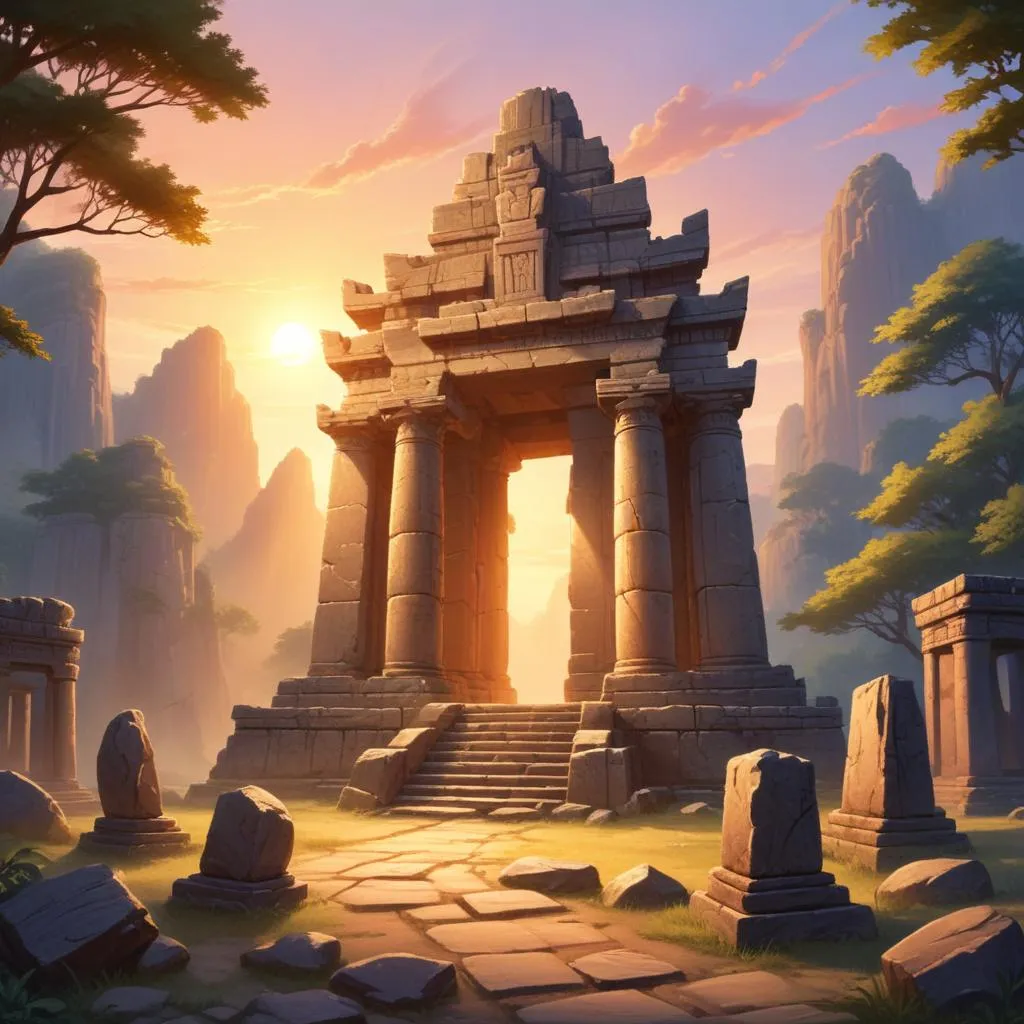
Ancient structures remind us of enduring human questions
The great war of Kurukshetra, immortalized in the Mahabharata, is often viewed as a historical or mythological event that concluded millennia ago. Yet, its echoes reverberate through time, not as distant thunder but as the constant murmur within our own consciousness. The battlefield of Kurukshetra was more than a geographical location; it was a metaphor for the eternal human struggle. The question we must ask ourselves today is stark: Have we left that battlefield, or do we carry it within us, re-enacting its conflicts daily?
The Internal Battlefield: From Then to Now
The central allegory of the Mahabharata is the war between the Pandavas and Kauravas, representing the clash between dharma (righteous order) and adharma (chaos, unrighteousness). This was never merely a family feud over a kingdom. It was, and remains, a map of the human condition.
The Enduring Conflicts
- Attachment vs. Duty (Arjuna's Dilemma): Arjuna's paralysis on the battlefield, faced with fighting his own kin, mirrors our modern conflicts between personal desires, emotional attachments, and our perceived duties. How often do we choose comfort over what is right?
- Ego vs. Wisdom (Duryodhana's Refusal): Duryodhana's infamous line, "I know what is dharma, but I have no inclination toward it," is a perfect snapshot of the intellect subjugated by ego and desire. In an age of information, we frequently know the right course but lack the will to follow it.
- Partiality & Poor Counsel (Blind King Dhritarashtra): The blind king's willful ignorance and favoritism symbolize the danger of biased judgment and surrounding ourselves with voices that feed our prejudices rather than challenge them.

Nature reflects the balance we seek internally
Modern Kurukshetras: Where We Fight Today
The physical weapons may have changed, but the nature of the warfare remains eerily familiar. Our battlefields have simply transformed.
1. The Digital Kurukshetra
Social media and digital spaces have become new-age battlefields of ideology. Here, we witness daily wars of words, the weaponization of information (modern-day 'astra'), echo chambers that mimic the closed counsel of the Kauravas, and the immense difficulty of discerning truth in a sea of misinformation—a challenge akin to seeing the universal form revealed to Arjuna.
2. The Environmental Dharma
The Mahabharata war resulted in catastrophic ecological damage. Today, our war against nature—exploitation of resources, pollution, and climate change—represents a profound adharmic conflict. The duty (dharma) to protect and nurture our environment is a central battle we are currently losing.
3. The Inner Pandavas & Kauravas
Each of us hosts the five Pandava qualities (Yudhishthira's truth, Bhima's strength, Arjuna's focus, Nakula's grace, Sahadeva's wisdom) and their shadow counterparts—the hundred tendencies of greed, jealousy, and hatred represented by the Kauravas. Our daily choices determine which side gains ground.
The Bhagavad Gita: A Manual for Contemporary Warriors
Delivered on the brink of war, the Gita's teachings are not a call to arms but a guide to navigating life's inevitable conflicts with clarity and equanimity. Its core messages are directly applicable:
- Nishkama Karma (Selfless Action): Perform your duty without attachment to the results. In a goal-obsessed culture, this teaches us to focus on the quality of our effort rather than being paralyzed by fear of failure or addicted to specific outcomes.
- Stithaprajna (Steady Wisdom): Cultivating a mind undisturbed by success and failure, pleasure and pain. This is the ultimate antidote to the anxiety and emotional volatility of modern life.
- Seeing the Self in All: The vision of the universal self breaks down the illusion of the "other"—the very root of conflict, whether familial, social, or international.
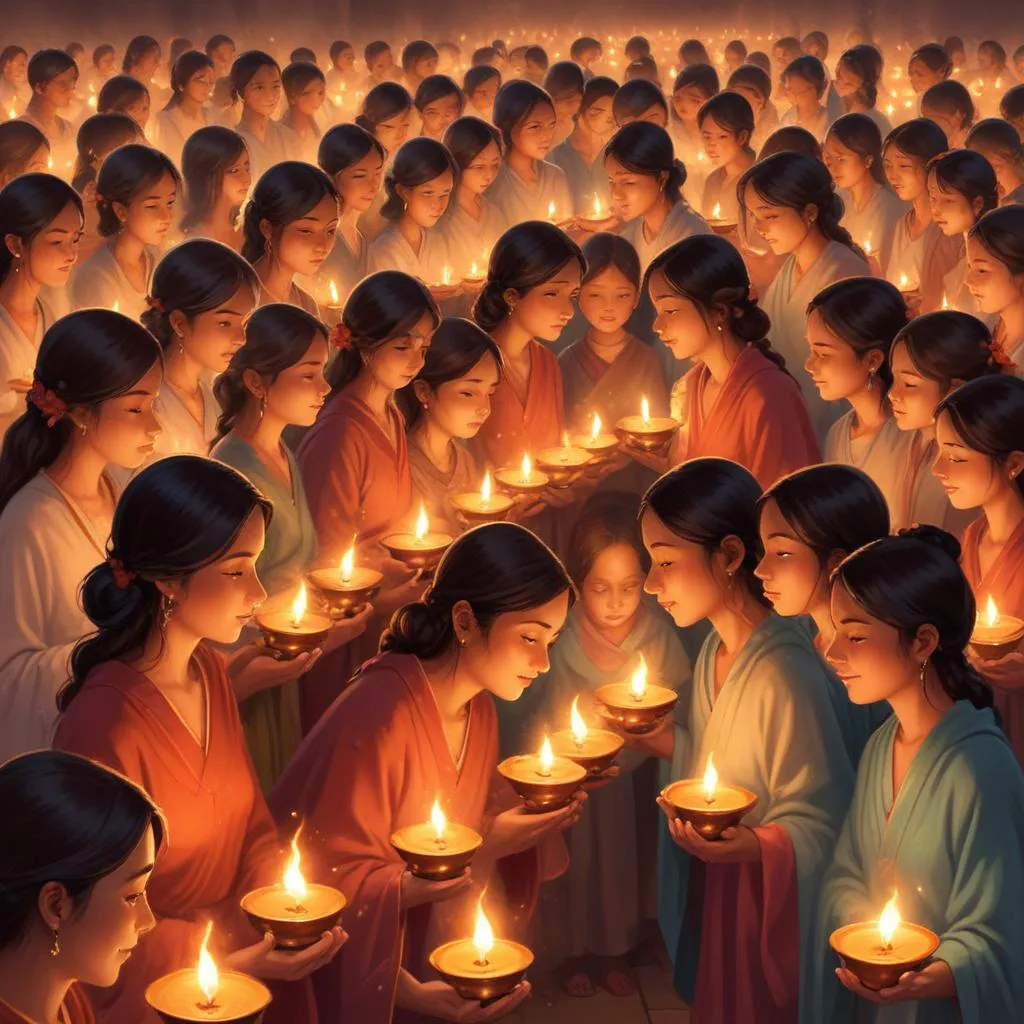
Light dispels darkness, just as wisdom dispels inner conflict
Ceasefire: How to Step Off the Battlefield
The war ends not when an external enemy is defeated, but when the internal one is recognized and reconciled. Here are ways to apply Kurukshetra's lessons for peace:
- Practice Self-Observation: Become the Sanjaya (the narrator) of your own mind. Witness your thoughts and impulses without immediately identifying with them. Is this impulse from my "Pandava" or "Kaurava" nature?
- Choose Your Counsel Wisely: Surround yourself with voices of wisdom (your Lord Krishna) that remind you of your higher purpose, not just voices that validate your baser instincts.
- Define Your Dharma: Clarify your core values and principles. What is your "right action" in your roles as a professional, family member, and citizen? Act from that place.
- Seek Integration, Not Victory: The goal is not to annihilate parts of yourself but to integrate them under the governance of wisdom. Even the Kauravas were, symbolically, part of the same family.
Conclusion: The War That Never Ends—And Never Has To
Yes, we are still fighting the war of Kurukshetra. It is fought in our boardrooms and bedrooms, on our screens and in our hearts. But this is not a cause for despair. Recognizing the timeless nature of this conflict is the first step toward transforming it.
The legacy of Kurukshetra is not one of inevitable bloodshed, but of eternal choice. It presents us with the ultimate human freedom: the choice between the path of conscious, dharmic action and the path of reactive, ego-driven conflict. The battlefield is set within us every moment. The good news is, so is the chariot of Arjuna, and the ever-present guidance of the inner Krishna, waiting to be heard above the din of our personal war drums.