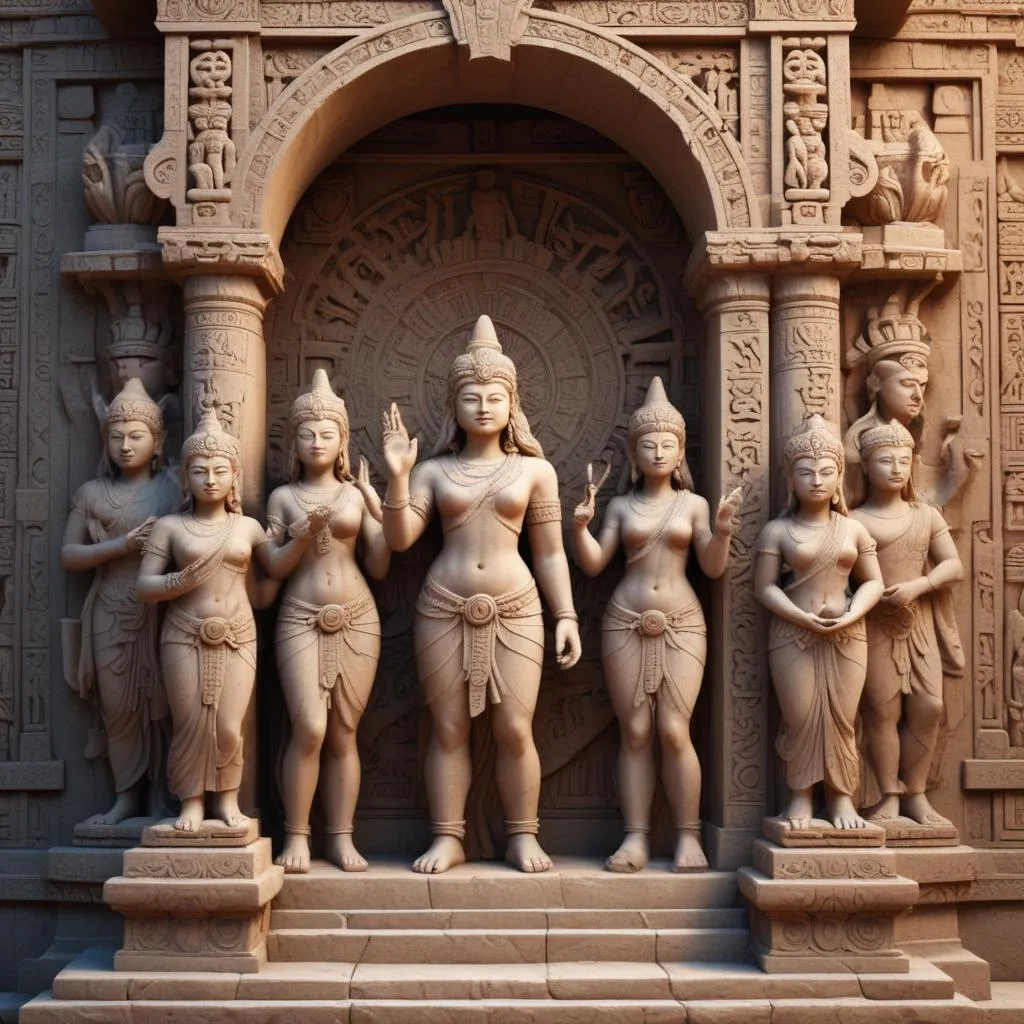
The Wife: A Polyandrous Paradox and Unwavering Partner
Draupadi's role as a wife is perhaps her most discussed and debated layer. Married to the five Pandava brothers—Yudhishthira, Bhima, Arjuna, Nakula, and Sahadeva—her polyandry is a unique and revolutionary aspect of the epic. This arrangement, born from her mother-in-law Kunti's inadvertent command, placed her at the center of a complex domestic and dharma-driven dynamic.
Beyond Conjugality: The Pillar of Dharma
Her wifely role transcended mere companionship. She became the emotional and moral anchor for each Pandava, adapting to their distinct natures:
- To Yudhishthira: A voice of caution and a challenger of his sometimes-blind adherence to duty, especially during the dice game.
- To Bhima: A confidante who shared his thirst for justice, often fueling his resolve. <
- To Arjuna: A respected partner in his spiritual and martial quests, whose winning of her hand began their shared destiny.
- To Nakula & Sahadeva: A unifying queenly figure, offering support and stability.
Through exile, humiliation, and war, her loyalty to her husbands as a collective unit was unwavering, yet she never shied from holding them accountable for their failures to protect her and their shared honor.
The Queen: Sovereignty, Statecraft, and Sacrifice
Born from sacred fire (yajna), Draupadi was destined for sovereignty. As the princess of Panchala and later the queen of Indraprastha and Hastinapura, she was a masterful stateswoman.
Her court in Indraprastha was a symbol of prosperity, justice, and cultural pinnacle. She understood that a queen's duty extended beyond the palace walls to the welfare of every subject. Her leadership was tested most severely during the years of exile, where she, alongside her husbands, endured hardship with remarkable resilience, transforming the forest into a court of its own.
The infamous dice game, where she was staked and lost, was not just a personal violation but a direct assault on her sovereignty and the integrity of the kingdom she represented. Her subsequent vow—to leave her hair untied until it could be washed in the blood of her tormentors—was not merely a personal oath but a queen's declaration of a righteous war to reclaim justice and rightful authority.
The Fire: The Unquenchable Spirit of Justice
This is Draupadi's most profound layer. She is often called Yajnaseni (born from the sacrificial fire) and Agnisuta (daughter of fire), titles that are deeply literal and symbolic.
Fire as Purification and Protest
Her entire life was a testament to a fiery spirit that could not be subdued:
- In her questioning: During the disrobing attempt (Cheer-Haran), her fiery questions to the elders in the Kuru court—"What dharma protects the one who has lost everything?"—were a purifying flame exposing their moral bankruptcy.
- In her resilience: Like fire, she could be suppressed (during exile) but never extinguished, always smoldering, waiting for the wind of justice to reignite her.
- In her transformation: Fire transforms what it touches. Draupadi's presence transformed the Pandavas' destiny from passive victims to active agents of cosmic rebalancing. Her anger was the catalytic fire that made the Kurukshetra war inevitable as a necessary, if tragic, cleansing.

This inner fire was not destructive rage alone; it was the light of discernment, the heat of unwavering commitment to truth (satya), and the energy of shakti—the feminine divine power that upholds the cosmic order.
The Interwoven Tapestry: A Unified Archetype
These layers—wife, queen, fire—are not separate. They are inextricably woven together. Her fiery nature informed her queenship, demanding justice. Her commitment as a wife was filtered through her sovereign dignity. She represents the archetype of the empowered feminine that balances devotion with strength, duty with righteous anger, and sacrifice with an unassailable sense of self.
Draupadi's story endures because she is a mirror to complex human experiences: of injustice, resilience, multifaceted relationships, and the eternal struggle to uphold one's dignity and truth in an imperfect world. She is not just a character from an ancient text; she is a timeless symbol of the fire that resides within, waiting to illuminate, purify, and transform.