
Ancient temples in forest settings often serve as backdrops for spiritual encounters
In the vast tapestry of the Mahabharata, one of the most profound and transformative episodes occurs not on the battlefield of Kurukshetra, but in the serene wilderness of the Himalayas. This is the story of Arjuna's encounter with Lord Shiva in the guise of a Kirata, a tribal hunter—a divine test that would grant the Pandava warrior his most powerful weapon and, more importantly, a deeper understanding of devotion and humility.
The Context: Arjuna's Quest for the Pashupatastra
Following the fateful game of dice that led to the Pandavas' exile, Arjuna embarked on a personal quest to acquire divine weapons (astras) in preparation for the inevitable war. His journey took him to the Himalayas, where he engaged in severe penance to please Lord Shiva, the destroyer and greatest of all warriors. Arjuna's goal was to obtain the Pashupatastra, the most formidable celestial weapon in Shiva's arsenal, capable of destroying creation itself.
The Divine Test Unfolds
As Arjuna performed his austerities, a demon named Muka, taking the form of a wild boar, charged toward him with murderous intent. Simultaneously, Shiva himself had taken the form of a Kirata—a rough, rustic hunter from the mountainous tribes—accompanied by his divine consort Parvati as a huntress.

The Himalayan forests where this divine encounter took place
The Conflict Over the Boar
Both Arjuna and the Kirata released arrows that struck the boar simultaneously. A dispute arose between them about who had actually killed the beast. The Kirata, appearing as an ordinary hunter, claimed the kill as his own. Arjuna, unaware of the hunter's true identity, argued that his arrow had slain the demon.
What followed was a heated argument that escalated into a physical confrontation. The proud kshatriya warrior found himself locked in combat with what appeared to be a mere tribesman. To Arjuna's astonishment, the Kirata matched him blow for blow, displaying martial prowess that seemed impossible for an ordinary human.
The Moment of Revelation
As their battle reached its peak, Arjuna created a Shiva Linga from the earth and offered flowers in worship. To his amazement, he saw the flowers he had offered to the Linga appear on the body of the Kirata. In that moment of profound realization, the scales fell from Arjuna's eyes.
The Pandava prince immediately fell at the Kirata's feet, recognizing Lord Shiva. Overwhelmed with devotion and remorse for having fought the divine, Arjuna sought forgiveness. Shiva, pleased with Arjuna's valor, humility, and devotion, revealed his true form in all its magnificent glory and blessed him.
Lessons from the Encounter
The story of Kirata and Arjuna offers timeless spiritual insights:
- Divine in Disguise: The Supreme can appear in any form, often the most unexpected, to test and guide devotees.
- Humility Before Power: Arjuna's martial skill alone couldn't win him the Pashupatastra; it was his eventual surrender and humility that earned Shiva's grace.
- Beyond Appearances: True devotion sees the divine beyond external appearances—whether in a majestic form or a simple hunter.
- The Purpose of Tests: Divine tests are not punishments but opportunities for growth and deeper realization.
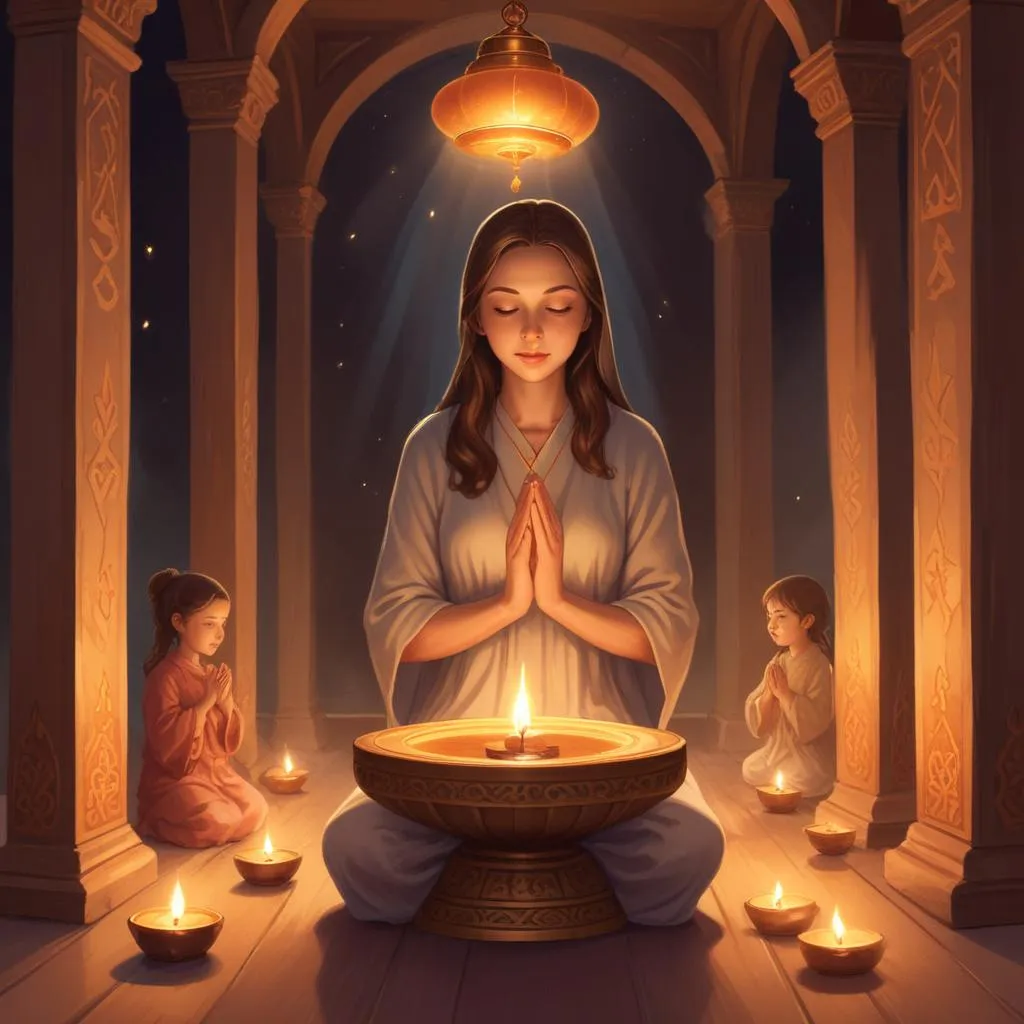
The light of devotion that transforms the seeker
The Gift of Pashupatastra
Pleased with Arjuna's devotion and valor, Shiva not only granted him the Pashupatastra but also bestowed other divine weapons and blessings. More importantly, Arjuna gained Shiva's personal favor, which would prove crucial during the Kurukshetra war. This encounter transformed Arjuna from a great warrior into a divinely empowered instrument of dharma.
Enduring Significance
The tale of Kirata and Arjuna continues to inspire spiritual seekers and devotees. It reminds us that the divine may test us in unexpected ways, often through challenges that force us to look beyond our ego and limited perceptions. True victory comes not through overpowering others, but through surrendering to the higher truth.
In temples and artistic representations across India, this story is celebrated as the ultimate example of Shiva's playful yet profound engagement with his devotees—where the Lord becomes the devotee's competitor only to ultimately become their greatest benefactor.