The Mahabharata, one of humanity's greatest epics, is far more than a tale of war and dynasty. It is a profound philosophical treatise that explores the deepest questions of existence, duty, and destiny. At its core lies a sophisticated and multi-layered understanding of time—known as Kāla in Sanskrit—which governs the cosmos, dictates the rise and fall of ages, and shapes the moral universe of its characters.
Kāla: Time as the Ultimate Force
In the Mahabharata, time is not a mere linear measurement but a dynamic, all-consuming, and transformative power. It is personified and often addressed as the supreme controller. A pivotal moment in the epic occurs when Lord Krishna reveals his cosmic form to Arjuna, where time is visualized as the agent of destruction, devouring all beings.
— Bhagavad Gita, Chapter 11, Verse 32
This declaration reframes the impending war from a personal conflict into a necessary event within time's grand, inescapable cycle. Time (Kāla) is the engine of change, the force that brings about the end of one Yuga (age) and the beginning of another, operating in harmony with the cosmic law of Dharma.
The Cyclical Yugas and the Mahabharata's Epoch
The epic is set at the critical juncture of the Dvapara Yuga ending and the Kali Yuga beginning. This transition is marked by a profound moral decline, a central theme driving the narrative. The philosophy of time here is cyclical, consisting of four repeating ages:
- Satya Yuga (Golden Age): Age of truth and perfect Dharma.
- Treta Yuga: Dharma is reduced by one quarter.
- Dvapara Yuga: Dharma is halved; the age of the Mahabharata's climax.
- Kali Yuga (Iron Age): Age of strife and minimal Dharma, which begins after the Kurukshetra war.
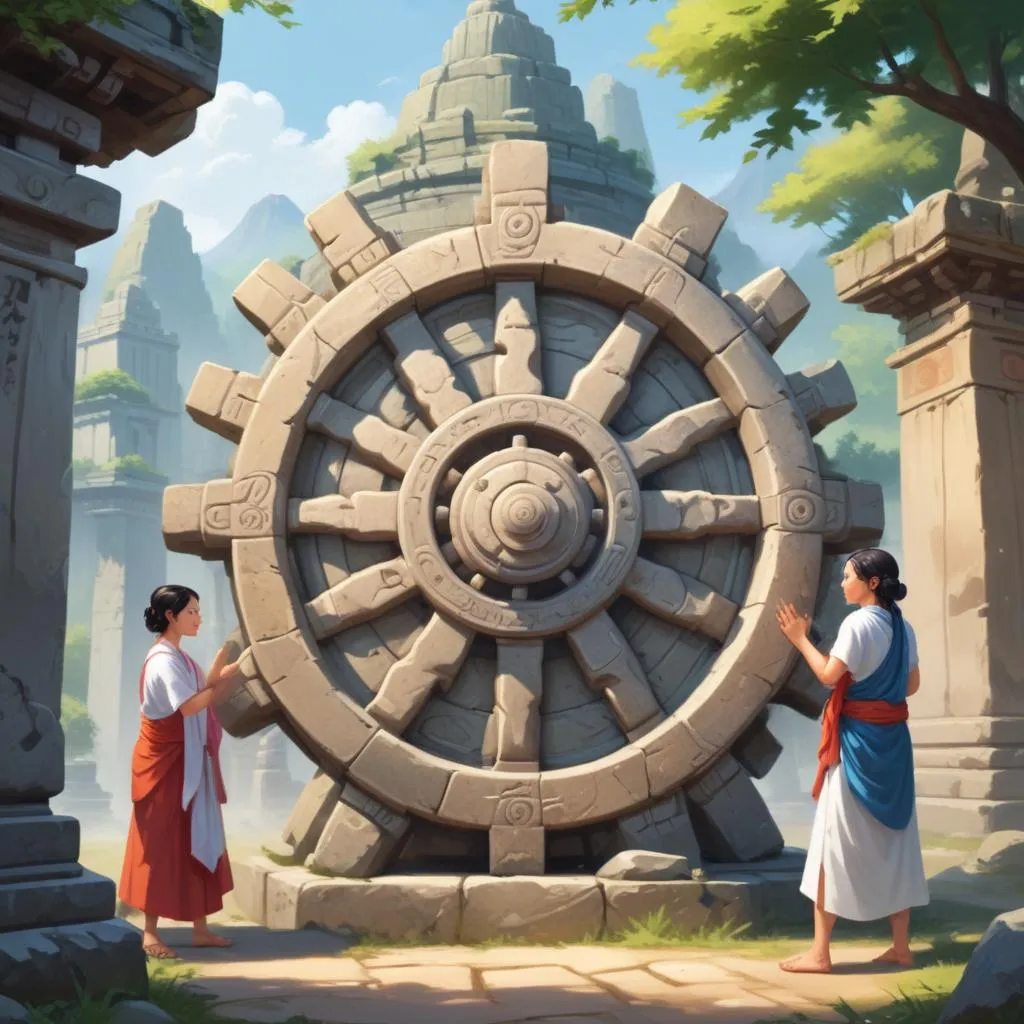
The characters are acutely aware they are living in a degenerate age. Their struggles—ethical dilemmas, compromised vows, and complex duties—are magnified by the oppressive weight of time's cycle. The war becomes the necessary, albeit tragic, mechanism to cleanse the world and reset the cosmic order for the next cycle.
Time, Fate, and Free Will
One of the epic's great philosophical tensions is between destiny (Daiva) and human effort (Paurusha). Time sets the stage and creates the conditions, but individuals retain agency within its flow.
The Inevitability and Human Choice
Despite prophecies and omens foretelling destruction, the Kauravas and Pandavas make conscious choices. Duryodhana's greed, Yudhishthira's fatal dice game, Karna's loyalty—all are personal decisions that accelerate time's predetermined course. The epic suggests that time creates the circumstances, but human action, driven by gunas (qualities) and karma, fills in the details.
Kāla as the Great Teacher
Time is the ultimate teacher of impermanence. The lengthy "peaceful" episodes of exile and the sudden violence of war alike demonstrate the transient nature of power, pleasure, and life itself. The lamentations after the war, where victors mourn as deeply as the vanquished, drive home time's lesson: all worldly states are temporary.
Practical Wisdom: Living in Harmony with Time
The Mahabharata doesn't just philosophize about time; it offers guidance on how to live within it.

- Perform Your Svadharma: Act according to your duty at the right time (Kāla). Arjuna's duty was to fight at Kurukshetra at that specific moment in time.
- Detach from Results: Since time will inevitably change outcomes, focus on righteous action itself, not the fruits—a central teaching of the Bhagavad Gita.
- Recognize the Moment of Opportunity (Kshana): The epic is filled with critical turning points. Understanding the "right time" to act, speak, or withdraw is a key to wisdom.
- Accept Impermanence: By internalizing that time erodes all things, one cultivates equanimity in success and failure, joy and sorrow.
Timeless Relevance
The Mahabharata's philosophy of time remains profoundly relevant. In a modern world obsessed with linear progress and speed, the epic reminds us of larger cycles—ecological, historical, and personal. It teaches that while we cannot stop time's flow, we can choose how we navigate it: with awareness, duty, and an understanding of our small yet significant role in the eternal cycle of creation, preservation, and dissolution.
Ultimately, the Mahabharata presents time as the canvas of Dharma. Our actions are the brushstrokes, and though the canvas itself will eventually be rolled away, the moral quality of our strokes defines our existence within the grand, timeless narrative.