
The timeless flow of sacred rivers mirrors the eternal, cyclical nature of divine play.
In the rich tapestry of Hindu spirituality, the concept of Leela (or Lila) stands out as one of the most beautiful and profound. Translating to "play," "pastime," or "divine drama," Leela refers to the idea that the entire cosmos and all events within it are a spontaneous, joyful expression of the divine. When we speak of Krishna's Leela, we delve into the heart of this philosophy, where every action, encounter, and story is not merely a historical account but a layered, intentional display of spiritual truth.
What is Leela? Beyond Human Understanding
Leela suggests that the Supreme Reality engages in creation not out of need, compulsion, or lack, but out of sheer bliss and creativity. It is a dance of consciousness, where the divine both conceals and reveals itself within the drama of existence. This framework transforms our perception of life's challenges, joys, and paradoxes.
- Spontaneous Play: Unlike human action driven by desire, divine play is purposeless in the mundane sense—its purpose is the expression of joy itself.
- Concealment in Plain Sight: The divine operates within the world, often unnoticed, guiding the grand narrative while respecting the laws of nature and free will.
- A Teaching Tool: Each story or "play" is designed to impart deep ethical, philosophical, and devotional lessons to the seeker.
The Stages of Krishna's Leela: From Vrindavan to Kurukshetra
Krishna's life, as depicted in scriptures like the Bhagavata Purana, is a classic exposition of Leela unfolding in distinct phases, each serving a unique spiritual function.
1. The Childhood Leelas in Vrindavan
These stories of Krishna's infancy and youth—stealing butter, subduing serpents, lifting a hill, and the enchanting Ras Leela dance—symbolize the soul's intimate, playful relationship with the divine. They represent divine grace that protects, delights, and fosters pure, selfless love (Bhakti).
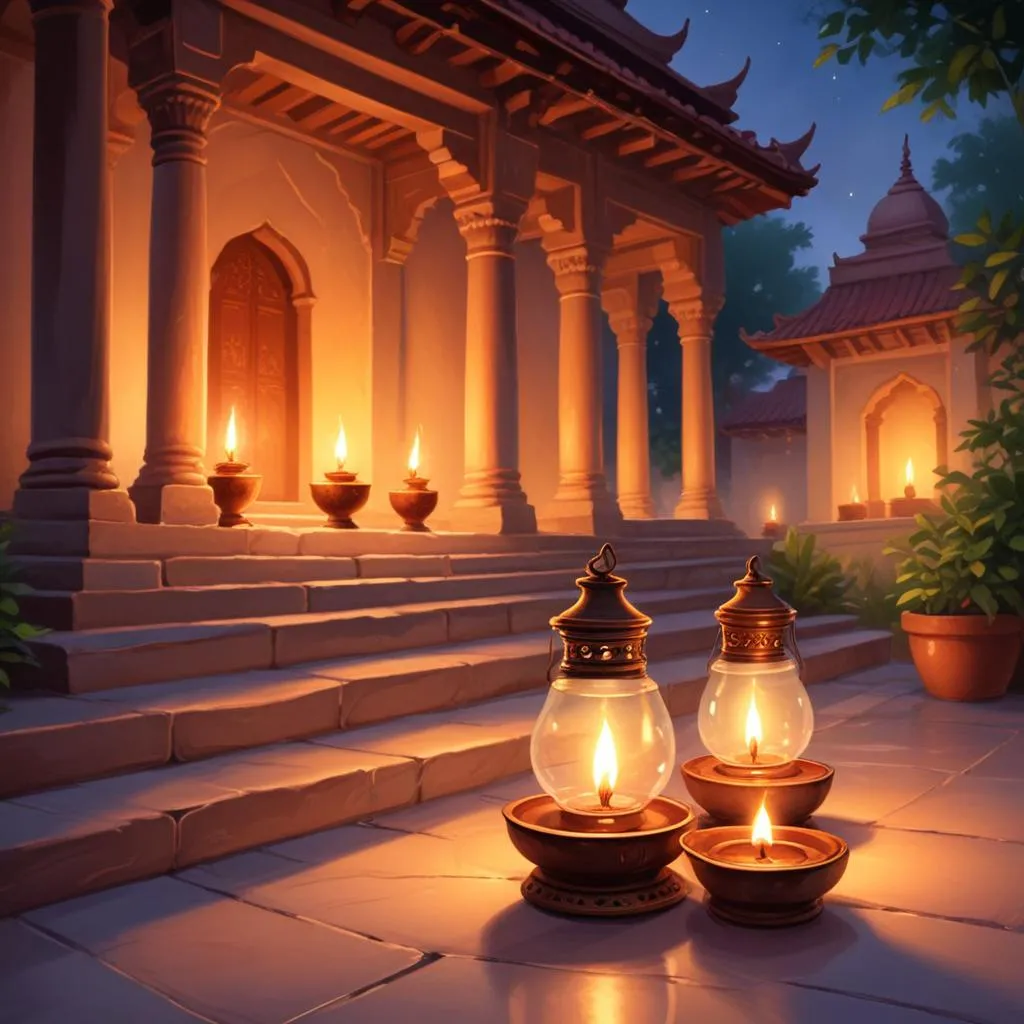
The light of devotion, akin to the guiding stories of Leela, illuminating the path of seekers.
2. The Dharma-Upheld Leelas in Mathura and Dwaraka
Here, Krishna transitions from a cowherd boy to a prince and king. Leelas like defeating the tyrant Kamsa and establishing righteousness showcase the divine's role as a protector of cosmic order (Dharma). They teach that the divine intervenes not to destroy, but to restore balance and provide a moral compass.
3. The Supreme Leela: The Bhagavad Gita
Perhaps the pinnacle of philosophical Leela occurs on the battlefield of Kurukshetra. Here, Krishna, as the charioteer, performs the leela of being the guide (Guru). He doesn't fight directly but reveals the ultimate truth of the self, duty, and devotion. This Leela happens within the human heart—the inner battlefield of confusion and duty.
The Personal Relevance: Finding Leela in Our Own Lives
Understanding Leela is not about passive observation but active reinterpretation of our own life stories.
- Seeing the Bigger Picture: Leela encourages us to view setbacks, synchronicities, and relationships as parts of a larger, meaningful narrative we may not fully grasp.
- Reducing Anxiety: If the universe is a divine play, our individual burdens are shared with a conscious, compassionate source. This can alleviate the weight of personal control.
- Cultivating Witness Consciousness: We learn to engage in life fully while maintaining an inner detachment, watching the "drama" of our thoughts and emotions without being completely swept away.

The elevated view from the mountain—a metaphor for the perspective gained by understanding Leela.
Leela vs. Maya: The Play and the Veil
Often discussed alongside Maya (the illusory power that veils reality), Leela offers a complementary view. Maya explains why we get lost in the drama, taking it as the only reality. Leela explains why the drama exists in the first place—as a loving, intentional expression. Realizing Leela is to see through Maya and appreciate the artistry behind the illusion.
Conclusion: Embracing the Dance
Krishna's Leela invites us to shift from a mindset of struggle to one of awe and participation. It suggests that we are not helpless actors on a random stage, but co-participants in a divine narrative full of purpose and grace. By contemplating these stories and their deeper meanings, we can find greater peace, wisdom, and a joyful connection to the mysterious flow of life itself—the ultimate Leela.